Constantine I AE2, Camp reverse
RIC VII Alexandria 36 · 325 AD-326 AD · Alexandreia Egypt
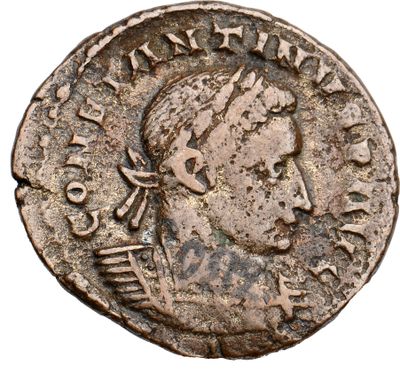
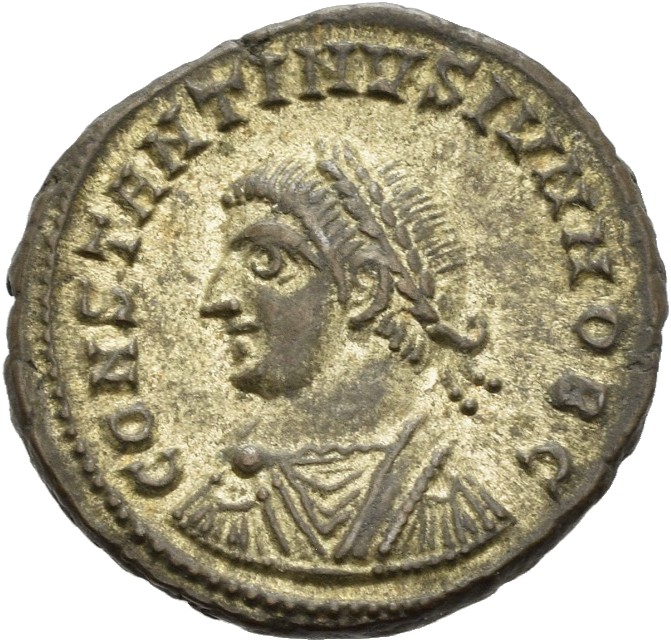 Obverse
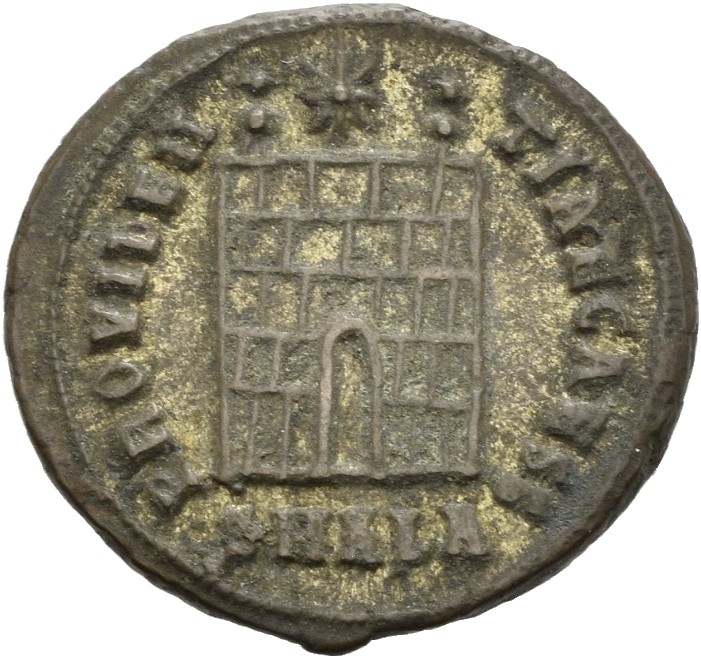 Reverse
Münzkabinett, Staatliche Museen zu Berlin
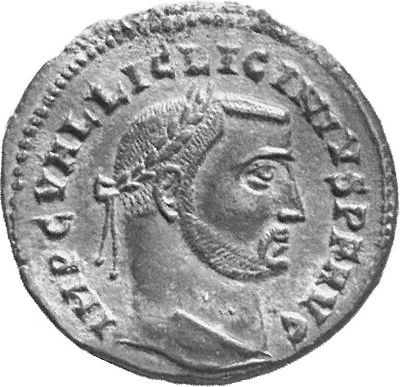
Obverse
CONSTANTINVS IVN NOB C
Bust of Constantine II, laureate, draped, cuirassed, left
Reverse
PROVIDEN-TIAE CAESS
Camp gate with two turrets, without doors, with varying number of stone layers; star above
About This Type
This RIC VII Alexandria 36 is an ae2 of Constantine I (325 AD-326 AD), struck at the Alexandreia Egypt mint. The reverse depicts Camp gate with two turrets, without doors, with varying number of stone layers; star above. Struck in bronze at a standard weight of 3.24g, 20mm diameter.
About the AE2
AE2 is a modern size classification for late Roman bronze coins measuring 21–25mm in diameter. This class includes the reduced folles and nummi of the Constantinian and Valentinianic periods. The classification is widely used in RIC and dealer catalogs when the ancient denomination name is debated.
About the Alexandreia Egypt Mint
Alexandreia was the sole mint for Roman provincial coinage in Egypt, producing a distinctive series of tetradrachms and bronze denominations from Augustus through Diocletian. Its coinage used the Egyptian dating system rather than Latin legends.
Frequently Asked Questions
- What is RIC VII Alexandria 36?
- RIC VII Alexandria 36 is a Bronze AE2 of Constantine I (325 AD-326 AD) struck at the Alexandreia Egypt mint cataloged under RIC no. RIC VII Alexandria 36.
- How do you identify RIC VII Alexandria 36?
- The obverse depicts Bust of Constantine II, laureate, draped, cuirassed, left with the inscription CONSTANTINVS IVN NOB C. The reverse depicts Camp gate with two turrets, without doors, with varying number of stone layers; star above with the inscription PROVIDEN-TIAE CAESS. Portrait type: laureate.
- What are the physical specifications of RIC VII Alexandria 36?
- RIC VII Alexandria 36 was struck in Bronze, standard weight 3.24g, diameter 20mm, die axis 12 h, struck.
More types of Constantine I

More types from Alexandreia Egypt


More AE2 types


You’ve attributed it. Now catalogue it
Record the attribution, weight, provenance, and photographs in your own NumisLens cabinet, a private catalogue built for ancient coins. Free for your first 50 coins.
Start your cabinet