Diocletian Fraction, Constantius Chlorus reverse
RIC VI Alexandria 48a · 296 AD-297 AD · Alexandreia Egypt
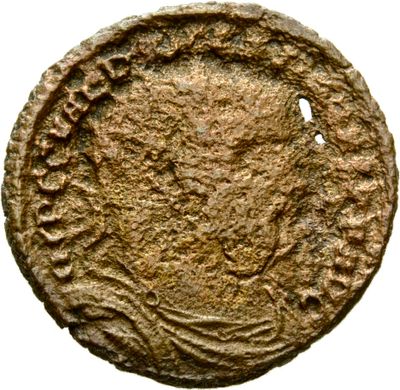
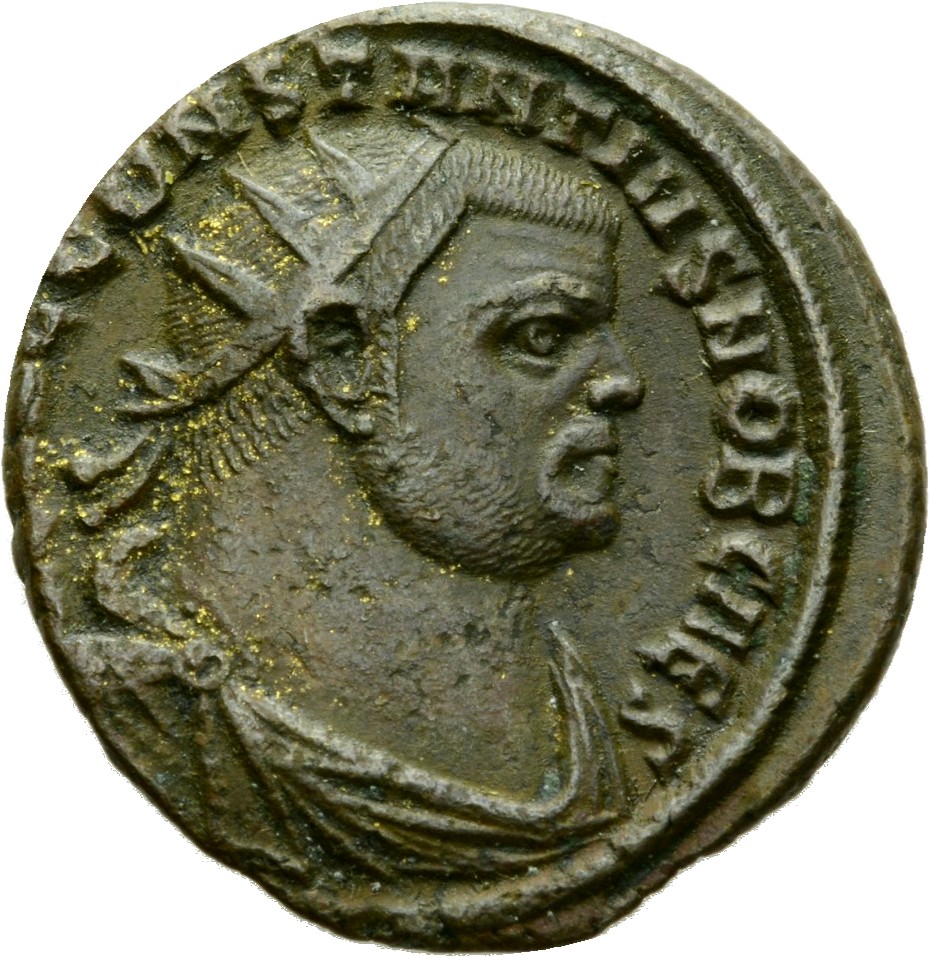 Obverse
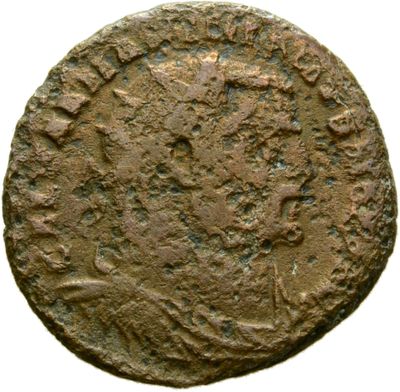
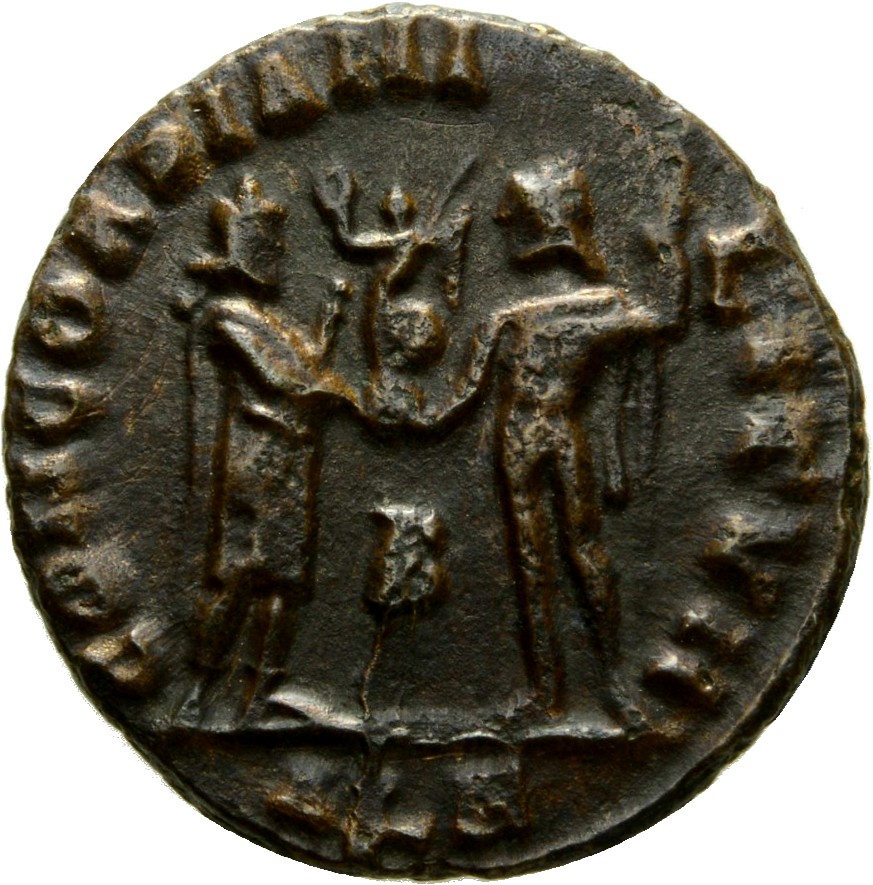 Reverse
Seminar für Alte Geschichte, Universität Freiburg
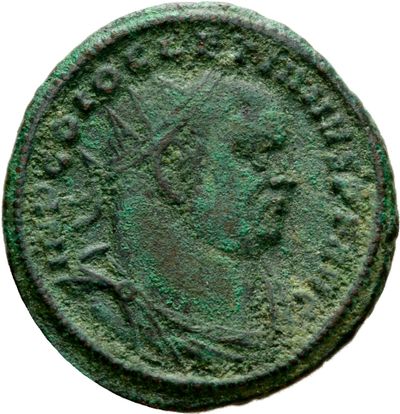
Obverse
FL VAL CONSTANTIVS NOB CAES
Bust of Constantius Chlorus, radiate, draped, cuirassed, right
Reverse
CONCORDIA M-ILITVM or CONCORDIA MI-LITVM or CONCORDIA MIL-ITVM or CONCORDIA MILI-TVM
Constantius Chlorus, draped, cuirassed, standing right, receiving small Victory on globe from Jupiter; Jupiter, standing left, leaning on sceptre
About This Type
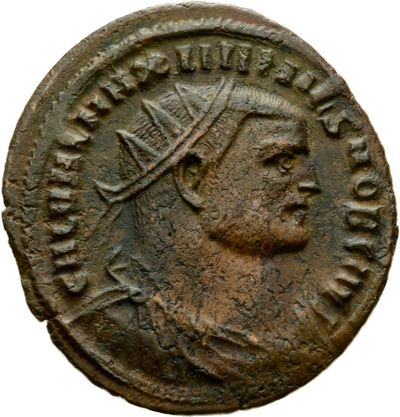
This RIC VI Alexandria 48a is a fraction of Diocletian (296 AD-297 AD), struck at the Alexandreia Egypt mint. The reverse depicts Constantius Chlorus, draped, cuirassed, standing right, receiving small Victory on globe from Jupiter; Jupiter, standing left, leaning on sceptre. Struck in bronze at a standard weight of 3.24g, 21mm diameter.
About the Alexandreia Egypt Mint
Alexandreia was the sole mint for Roman provincial coinage in Egypt, producing a distinctive series of tetradrachms and bronze denominations from Augustus through Diocletian. Its coinage used the Egyptian dating system rather than Latin legends.
Frequently Asked Questions
- What is RIC VI Alexandria 48a?
- RIC VI Alexandria 48a is a Bronze Fraction of Diocletian (296 AD-297 AD) struck at the Alexandreia Egypt mint cataloged under RIC no. RIC VI Alexandria 48a.
- How do you identify RIC VI Alexandria 48a?
- The obverse depicts Bust of Constantius Chlorus, radiate, draped, cuirassed, right with the inscription FL VAL CONSTANTIVS NOB CAES. The reverse depicts Constantius Chlorus, draped, cuirassed, standing right, receiving small Victory on globe from Jupiter; Jupiter, standing left, leaning on sceptre with the inscription CONCORDIA M-ILITVM or CONCORDIA MI-LITVM or CONCORDIA MIL-ITVM or CONCORDIA MILI-TVM. Portrait type: radiate.
- What are the physical specifications of RIC VI Alexandria 48a?
- RIC VI Alexandria 48a was struck in Bronze, standard weight 3.24g, diameter 21mm, die axis 11 h, struck.
More types of Diocletian
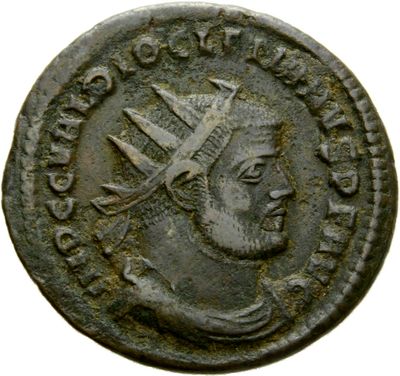

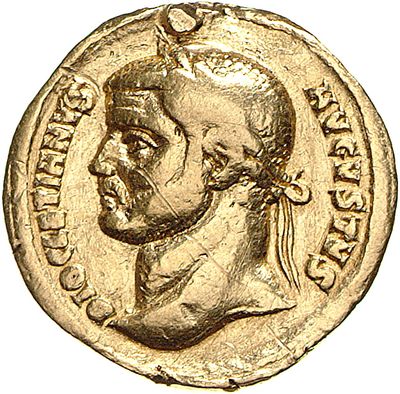
More types from Alexandreia Egypt


More Fraction types



You’ve attributed it. Now catalogue it
Record the attribution, weight, provenance, and photographs in your own NumisLens cabinet, a private catalogue built for ancient coins. Free for your first 50 coins.
Start your cabinet