Magnentius Large AE2, Two Victories reverse
RIC VIII Treveri 307 · 351 AD · Treveri
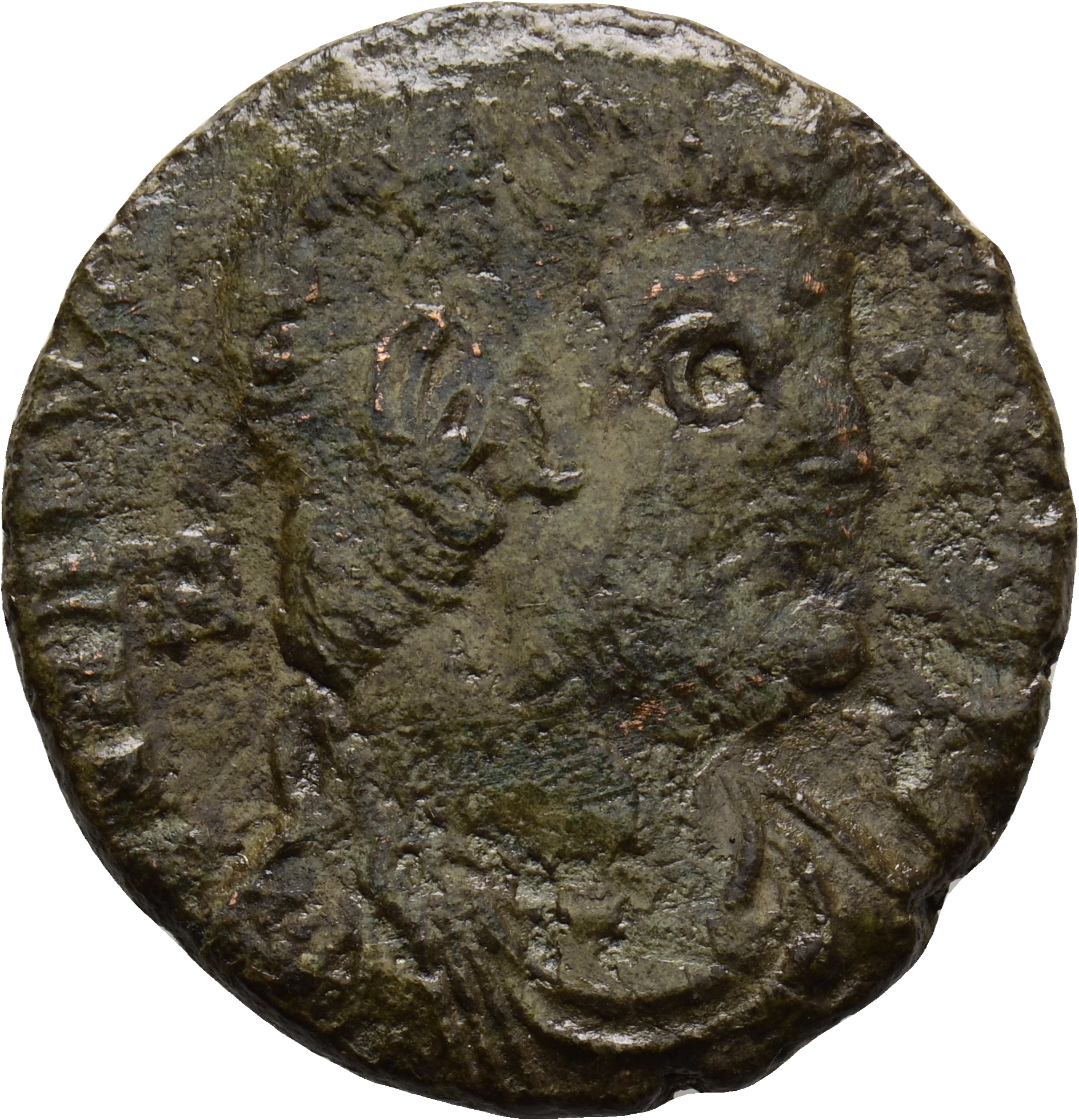 Obverse
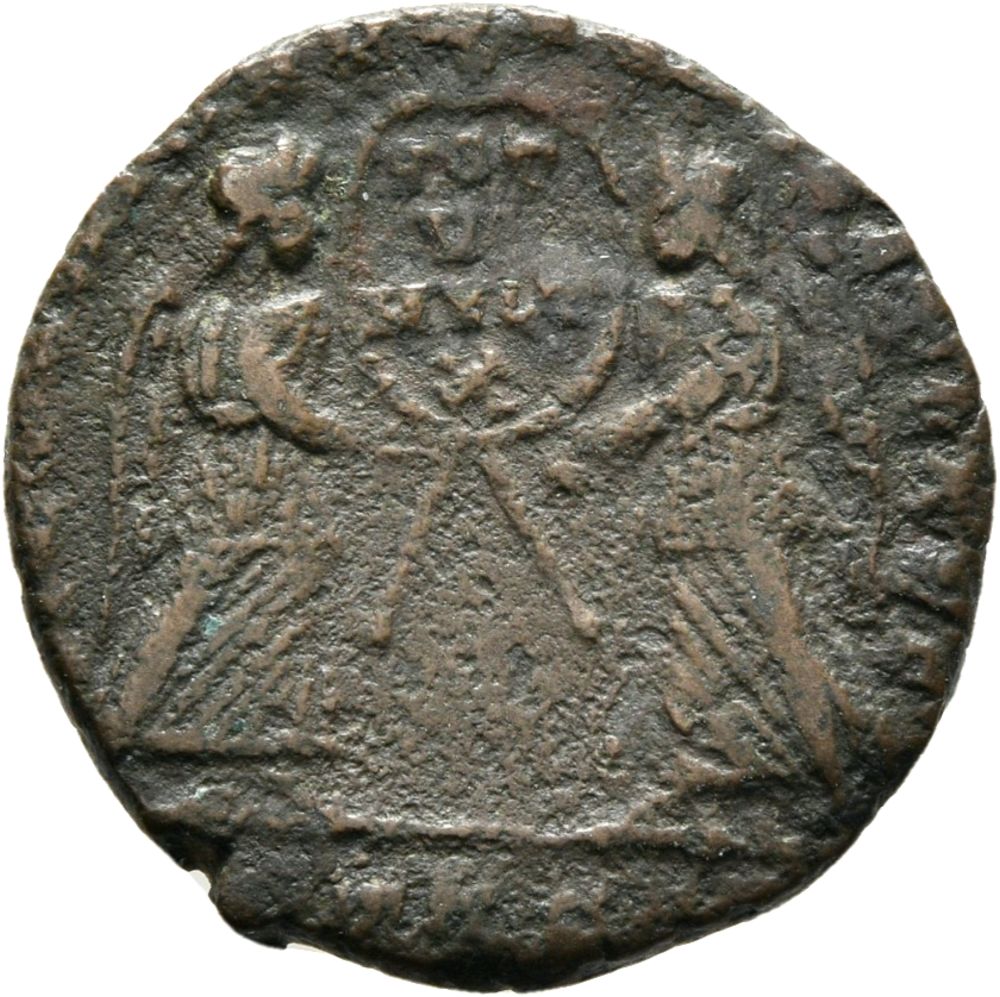 Reverse
Römisch-Germanisches Museum, Köln
Obverse
D N MAGNEN-TIVS P F AVG
Bust of Magnentius, bareheaded, draped, cuirassed, right; A behind bust
Reverse
VICTORIAE DD NN AVG ET CAE
Two Victories, winged, draped, facing each other, holding between them a wreath inscribed VOT/V/MVLT/X supported on a short column
About This Type
This RIC VIII Treveri 307 is a large ae2 of Magnentius (351 AD), struck at the Treveri mint. The reverse depicts Two Victories, winged, draped, facing each other, holding between them a wreath inscribed VOT/V/MVLT/X supported on a short column. Struck in bronze at a standard weight of 4.74g, 21mm diameter.
About the Large AE2
Large AE2 is a size classification for late Roman bronze coins at the upper end of the AE2 range, typically 23–25mm. These heavier pieces often date to the earlier years of a weight standard before the usual reduction over time.
About the Treveri Mint
Treveri (modern Trier, Germany) was one of the principal mints of the late Roman Empire, operating from the late third century through the fifth century. It was a primary source of gold solidi for the Western Empire.
Frequently Asked Questions
- What is RIC VIII Treveri 307?
- RIC VIII Treveri 307 is a Bronze Large AE2 of Magnentius (351 AD) struck at the Treveri mint cataloged under RIC no. RIC VIII Treveri 307.
- How do you identify RIC VIII Treveri 307?
- The obverse depicts Bust of Magnentius, bareheaded, draped, cuirassed, right; A behind bust with the inscription D N MAGNEN-TIVS P F AVG. The reverse depicts Two Victories, winged, draped, facing each other, holding between them a wreath inscribed VOT/V/MVLT/X supported on a short column with the inscription VICTORIAE DD NN AVG ET CAE. Portrait type: draped.
- What are the physical specifications of RIC VIII Treveri 307?
- RIC VIII Treveri 307 was struck in Bronze, standard weight 4.74g, diameter 21mm, die axis 1 h, struck.
More types of Magnentius



More types from Treveri
.aug.249/65389a7b9c583a13_obverse.jpg?width=400&resize=contain)



More Large AE2 types
You’ve attributed it. Now catalogue it
Record the attribution, weight, provenance, and photographs in your own NumisLens cabinet, a private catalogue built for ancient coins. Free for your first 50 coins.
Start your cabinet