Constantius II Reduced Siliqua, Constantius II reverse
RIC VIII Thessalonica 207 · 355 AD-361 AD · Thessalonica
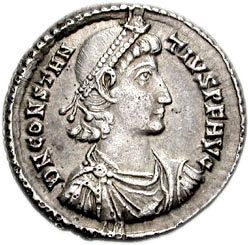
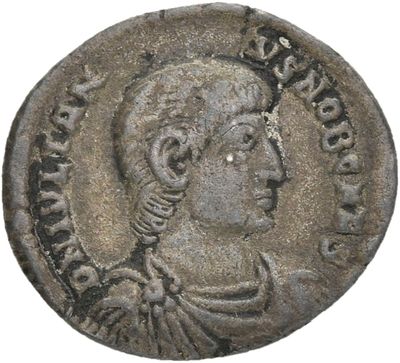
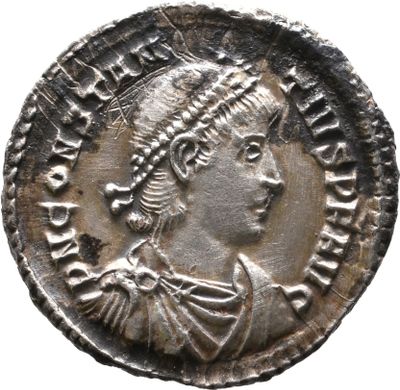
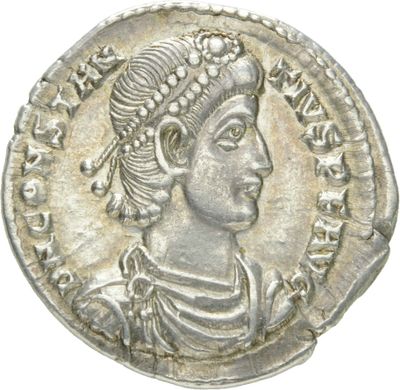
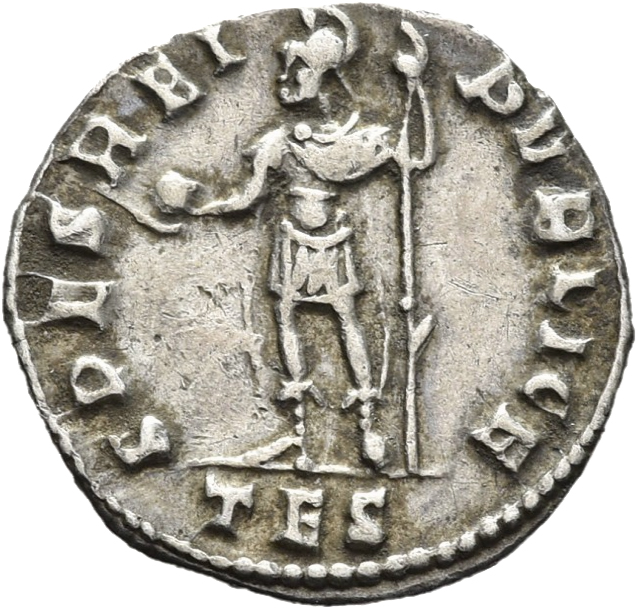 Obverse
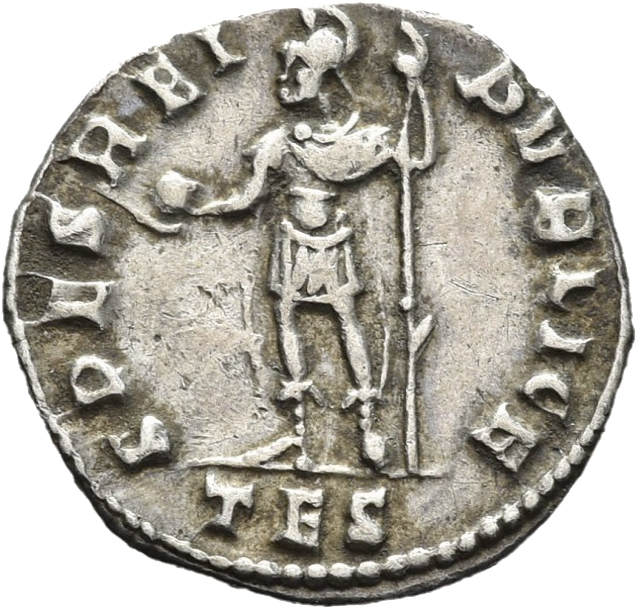 Reverse
Münzkabinett, Staatliche Museen zu Berlin
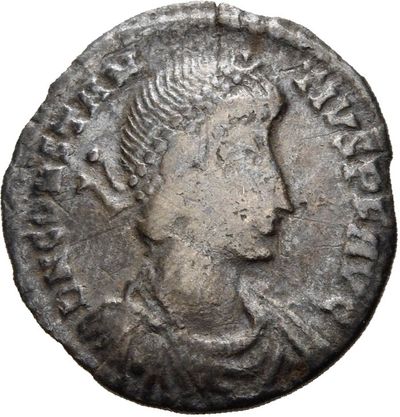
Obverse
D N CONSTAN-TIVS P F AVG
Bust of Constantius II, pearl-diademed, draped, cuirassed, right
Reverse
SPES REI - PVBLICE
Constantius II, helmeted, draped, cuirassed, standing left, holding globe in right hand and spear in left hand
About This Type
This RIC VIII Thessalonica 207 is a reduced siliqua of Constantius II (355 AD-361 AD), struck at the Thessalonica mint. The reverse depicts Constantius II, helmeted, draped, cuirassed, standing left, holding globe in right hand and spear in left hand. Struck in silver at a standard weight of 2.04g, 18mm diameter.
About the Reduced Siliqua
The reduced siliqua is a lighter version of the standard siliqua, struck at a lower weight standard during periods of monetary contraction in the late Roman empire. It typically weighs 1.0–1.5 grams compared to the full siliqua's 2–3 grams.
About the Thessalonica Mint
Thessalonica (modern Thessaloniki, Greece) operated as an imperial mint from the late third century. It was a key Balkan mint serving the military needs of the Danube and eastern frontiers.
Frequently Asked Questions
- What is RIC VIII Thessalonica 207?
- RIC VIII Thessalonica 207 is a Silver Reduced Siliqua of Constantius II (355 AD-361 AD) struck at the Thessalonica mint cataloged under RIC no. RIC VIII Thessalonica 207.
- How do you identify RIC VIII Thessalonica 207?
- The obverse depicts Bust of Constantius II, pearl-diademed, draped, cuirassed, right with the inscription D N CONSTAN-TIVS P F AVG. The reverse depicts Constantius II, helmeted, draped, cuirassed, standing left, holding globe in right hand and spear in left hand with the inscription SPES REI - PVBLICE. Portrait type: diademed.
- What are the physical specifications of RIC VIII Thessalonica 207?
- RIC VIII Thessalonica 207 was struck in Silver, standard weight 2.04g, diameter 18mm, die axis 5 h, struck.
More types of Constantius II




More types from Thessalonica



More Reduced Siliqua types


You’ve attributed it. Now catalogue it
Record the attribution, weight, provenance, and photographs in your own NumisLens cabinet, a private catalogue built for ancient coins. Free for your first 50 coins.
Start your cabinet