Constantius II Light Miliarensis, Victory reverse
RIC VIII Siscia 160 · 340 AD-350 AD · Siscia · Issued under Constans
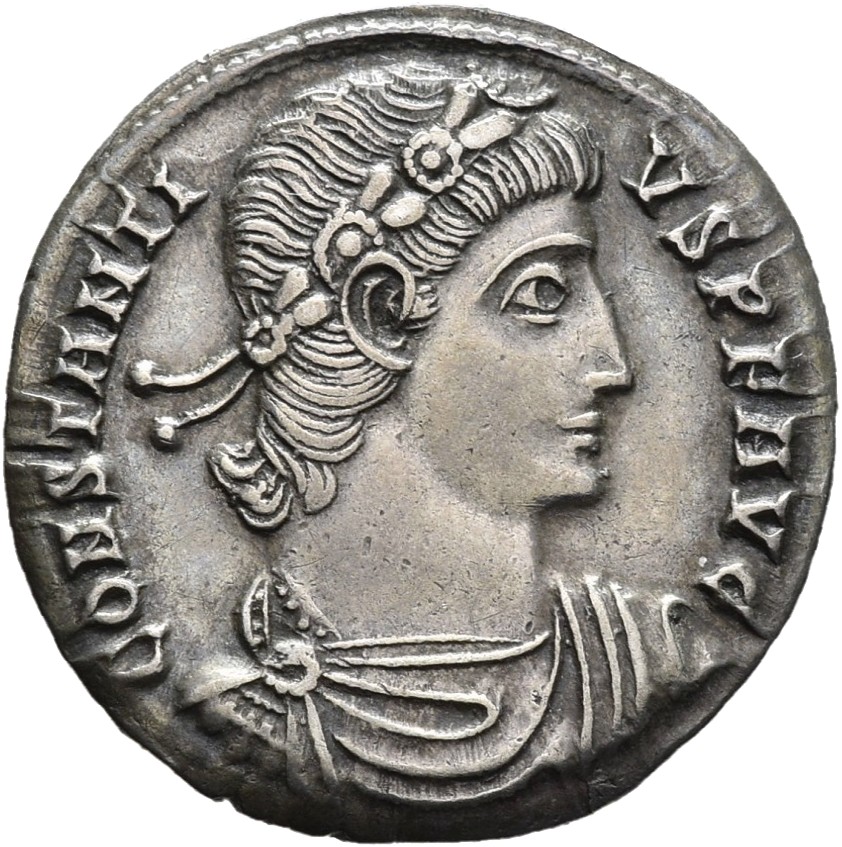 Obverse
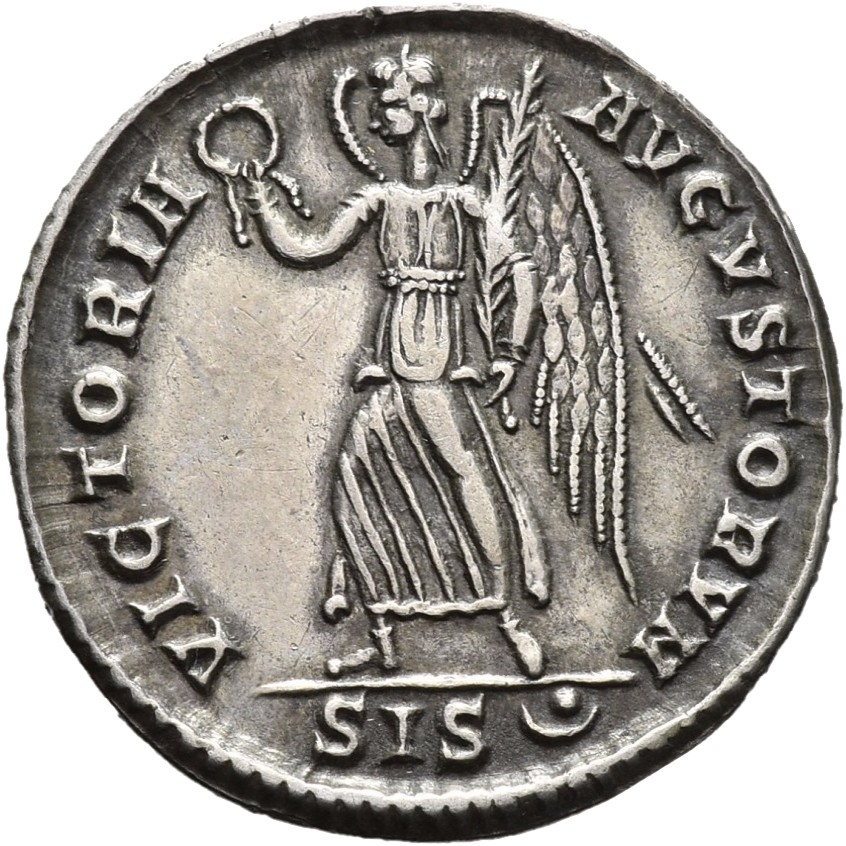 Reverse
Münzkabinett, Staatliche Museen zu Berlin
Obverse
CONSTANTI-VS P F AVG
Bust of Constantius II, laureate, rosette-diademed, draped, cuirassed, right
Reverse
VICTORIA - AVGVSTORVM
Victory, winged, draped, walking left, holding wreath in right hand and palm in left hand
About This Type
This RIC VIII Siscia 160 is a light miliarensis of Constantius II, issued under Constans (340 AD-350 AD), struck at the Siscia mint. The reverse depicts Victory, winged, draped, walking left, holding wreath in right hand and palm in left hand. Struck in silver at a standard weight of 4.44g, 24mm diameter.
About the Light Miliarensis
The light miliarensis was a large late Roman silver denomination, typically weighing 4.0–4.5 grams. It was a prestige issue, struck in smaller quantities than the siliqua and often given as imperial donatives.
About the Siscia Mint
Siscia (modern Sisak, Croatia) was a major late Roman mint, operating from the late third century through the late fourth century. It produced large quantities of bronze coinage for the Danube frontier region.
Frequently Asked Questions
- What is RIC VIII Siscia 160?
- RIC VIII Siscia 160 is a Silver Light Miliarensis of Constantius II issued under Constans (340 AD-350 AD) struck at the Siscia mint cataloged under RIC no. RIC VIII Siscia 160.
- How do you identify RIC VIII Siscia 160?
- The obverse depicts Bust of Constantius II, laureate, rosette-diademed, draped, cuirassed, right with the inscription CONSTANTI-VS P F AVG. The reverse depicts Victory, winged, draped, walking left, holding wreath in right hand and palm in left hand with the inscription VICTORIA - AVGVSTORVM. Portrait type: laureate.
- What are the physical specifications of RIC VIII Siscia 160?
- RIC VIII Siscia 160 was struck in Silver, standard weight 4.44g, diameter 24mm, die axis 6 h, struck.
More types of Constans



More types from Siscia

More Light Miliarensis types




Does this type match your coin?
Compare the available photographs, legends, and details with your coin. If this type matches, add your own specimen to your cabinet with its catalog reference, then record its measurements, provenance, and photographs. Free for your first 50 coins.
Review this type