Constantius II Siliqua, VOTIS reverse
RIC VIII Arelate 203 · 353 AD-355 AD · Arelate
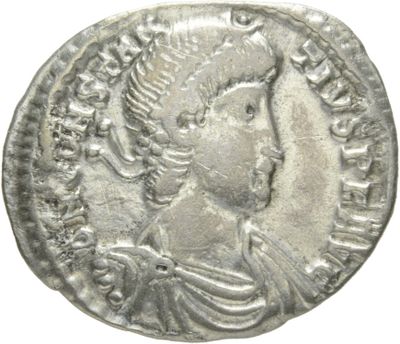
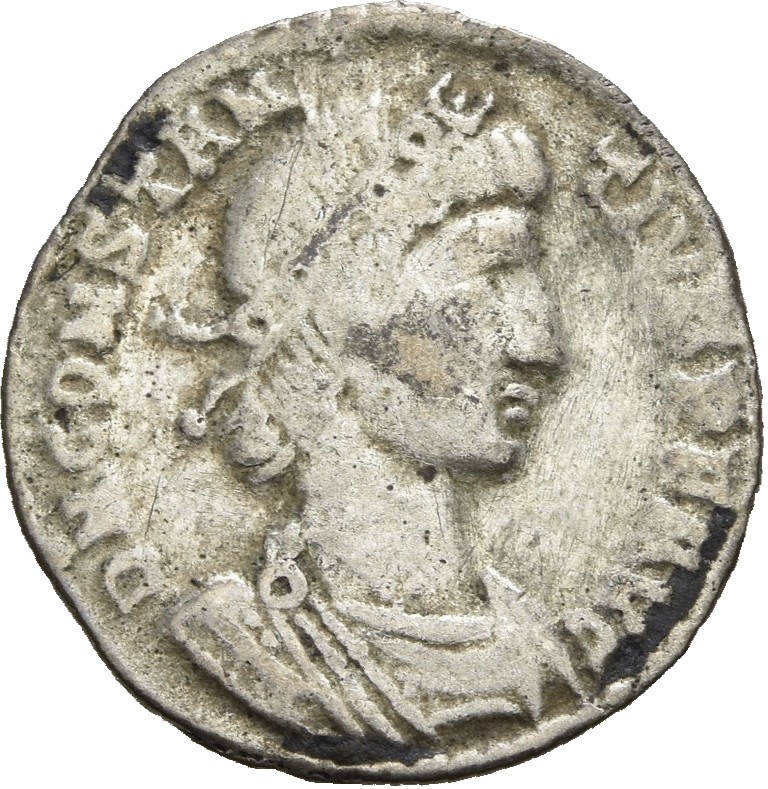 Obverse
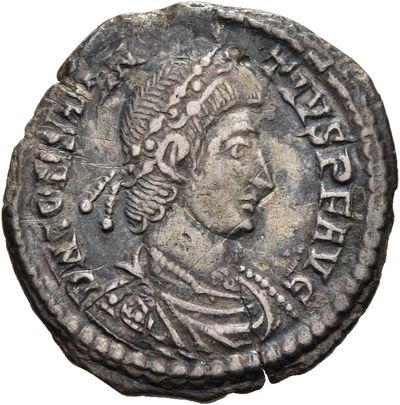
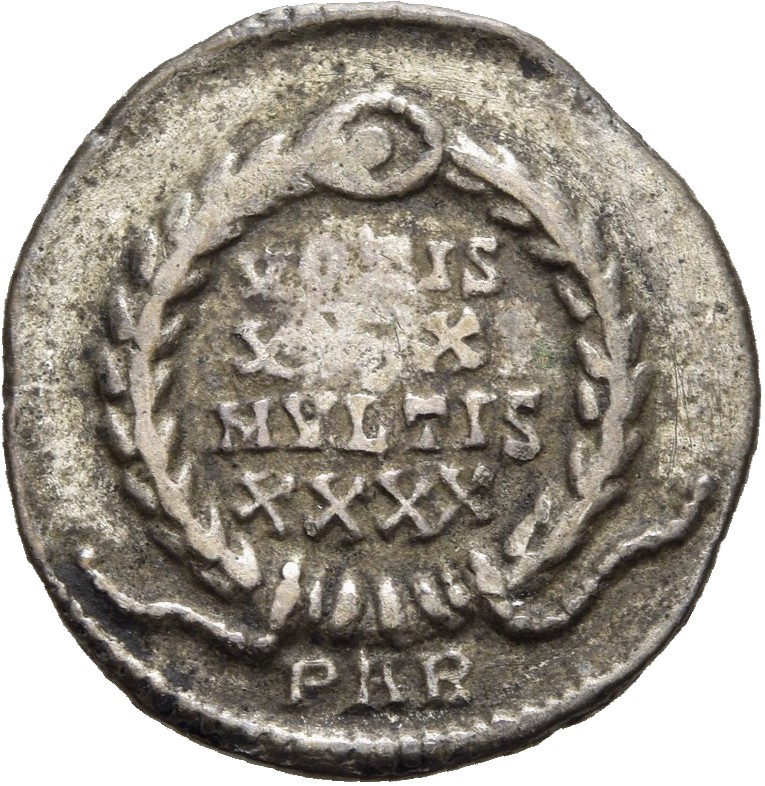 Reverse
Münzkabinett, Staatliche Museen zu Berlin
Obverse
D N CONSTAN-TIVS P F AVG
Bust of Constantius II, pearl-diademed, draped, cuirassed, right
Reverse
VOTIS / XXX / MVLTIS / XXXX // PAR
VOTIS/XXX/MVLTIS/XXXX within a wreath
About This Type
This RIC VIII Arelate 203 is a siliqua of Constantius II (353 AD-355 AD), struck at the Arelate mint. The reverse depicts VOTIS/XXX/MVLTIS/XXXX within a wreath. Struck in silver at a standard weight of 2.41g, 20mm diameter.
About the Siliqua
The siliqua was a late Roman silver denomination introduced in the fourth century, typically weighing 2–3 grams. It was the main silver coin of the late empire alongside the gold solidus.
About the Arelate Mint
Arelate (modern Arles, France) replaced the Lugdunum mint in the early fourth century and became one of the principal Western mints. Its mint mark typically includes AR or CON (Constantina).
Frequently Asked Questions
- What is RIC VIII Arelate 203?
- RIC VIII Arelate 203 is a Silver Siliqua of Constantius II (353 AD-355 AD) struck at the Arelate mint cataloged under RIC no. RIC VIII Arelate 203.
- How do you identify RIC VIII Arelate 203?
- The obverse depicts Bust of Constantius II, pearl-diademed, draped, cuirassed, right with the inscription D N CONSTAN-TIVS P F AVG. The reverse depicts VOTIS/XXX/MVLTIS/XXXX within a wreath with the inscription VOTIS / XXX / MVLTIS / XXXX // PAR. Portrait type: diademed.
- What are the physical specifications of RIC VIII Arelate 203?
- RIC VIII Arelate 203 was struck in Silver, standard weight 2.41g, diameter 20mm, die axis 12 h, struck.
More types of Constantius II





More types from Arelate



More Siliqua types



You’ve attributed it. Now catalogue it
Record the attribution, weight, provenance, and photographs in your own NumisLens cabinet, a private catalogue built for ancient coins. Free for your first 50 coins.
Start your cabinet